ServicesDock Levelers
Dock Leveler Repair and Installation in Mahanoy City
We repair, rebuild and replace dock levelers at warehouses, plants and receiving docks. We find why the lip won't extend or the deck drops, fix the cause, and confirm the leveler meets ANSI MH30.1 safety requirements before your crew uses it again.
The Job a Dock Leveler Does Every Shift
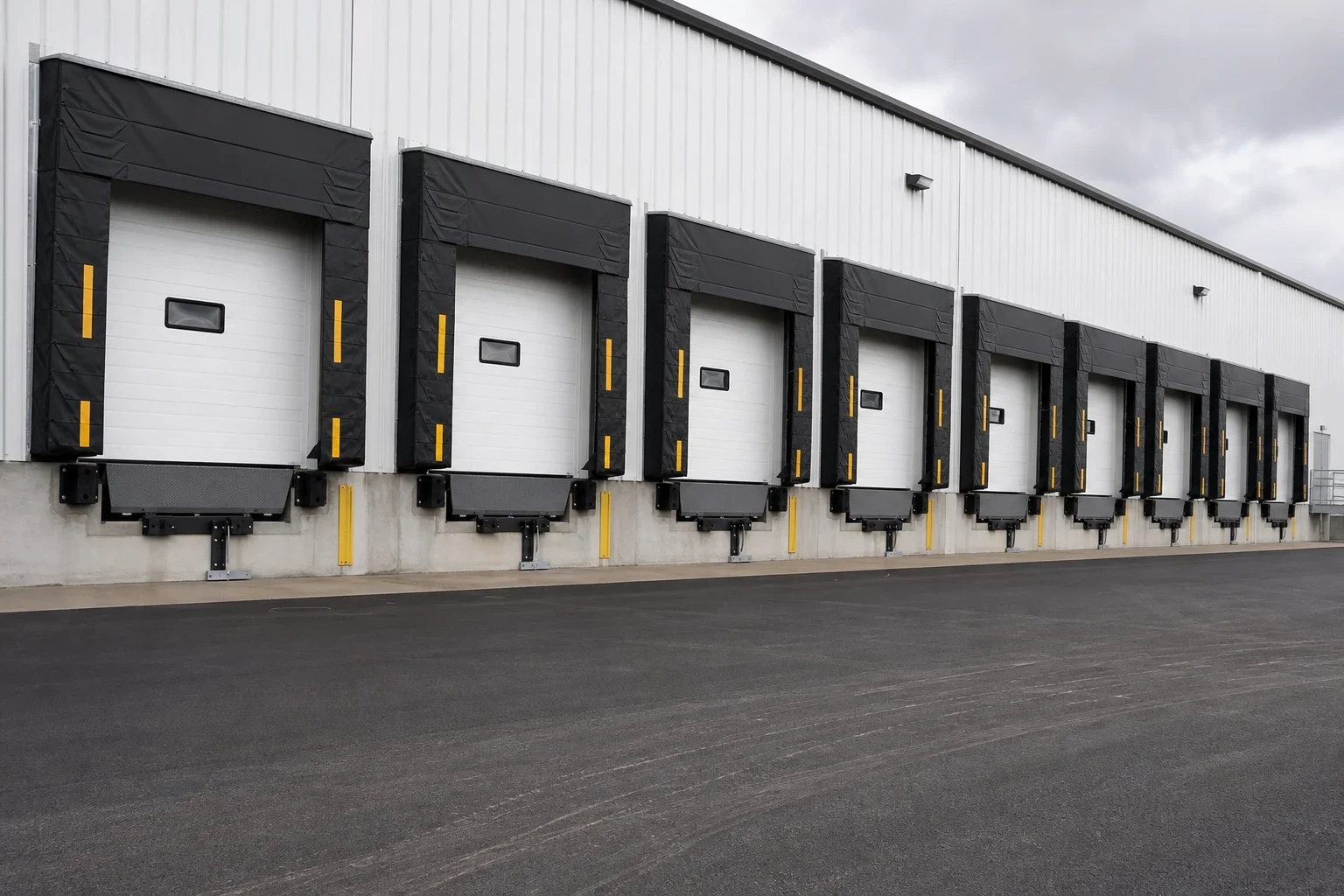
A dock leveler spans the gap and the height change between your dock floor and the bed of a trailer. Each forklift pass sends tens of thousands of pounds of rolling weight over the deck plate, the lip hinge and the rear hinge. Once any of them wears, the deck begins to bounce, sag or stick, and that door either slows down or stops working.
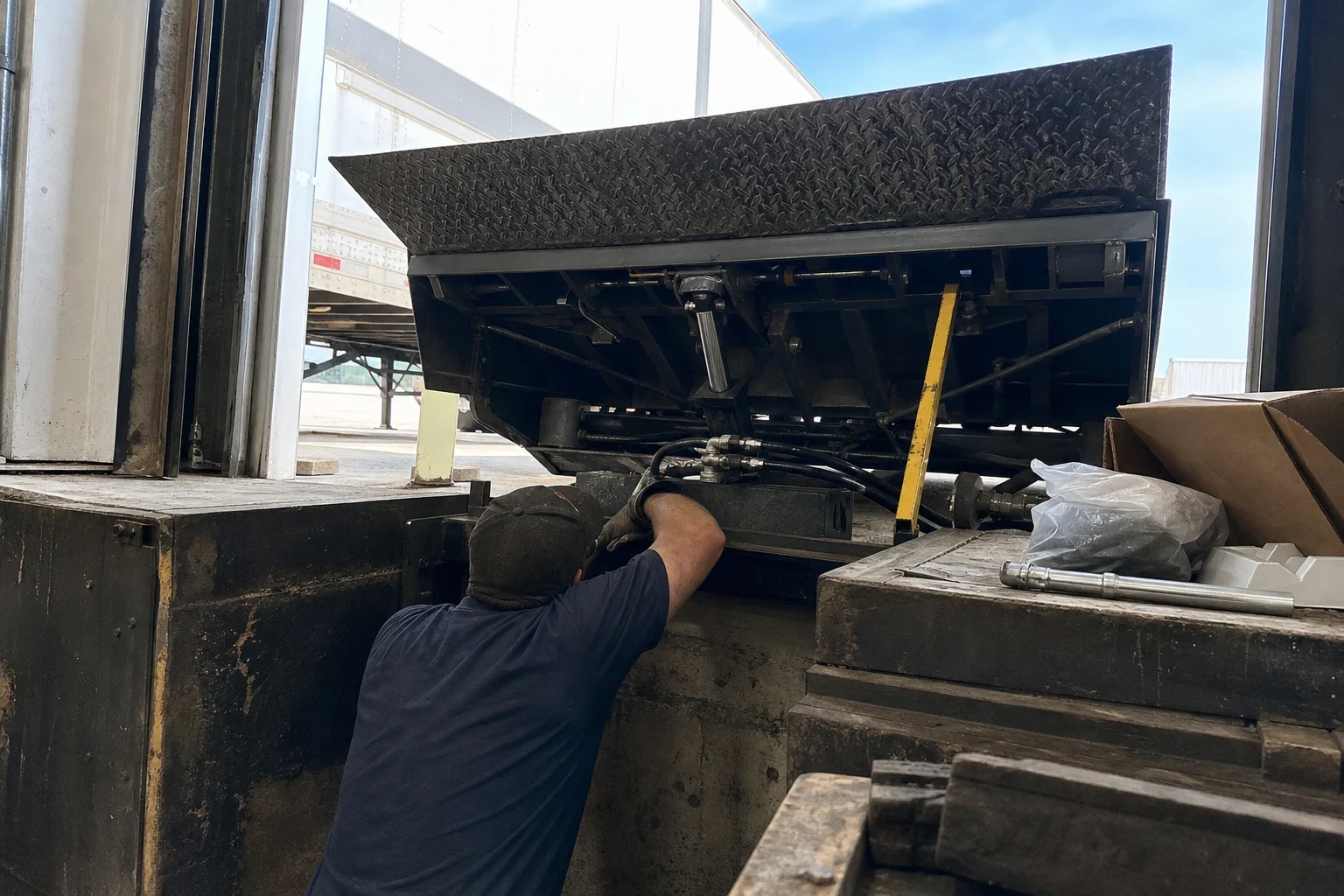
Our technicians service mechanical pull-chain levelers, hydraulic levelers with a power pack, air-bag levelers and edge-of-dock plates. Sometimes the fix is a spring adjustment or a new hinge pin. Other times it is a cracked lip, a rotted pit frame or a cylinder that will not hold pressure. We tell you which you are dealing with and whether repairing it holds up or a new unit is the wiser spend.
Safety checks are never left out. ANSI MH30.1 is the performance and safety standard for levelers, and it calls for free-fall protection if a trailer leaves early, toe guards on the sides and a maintenance strut for anyone under the deck. Every leveler we work on gets those checked.
What Our Dock Leveler Service Covers
- Lip and hinge repair
- Bent or cracked lips, worn lip hinge pins and seized hinge tubes are the most common failures we see. We straighten or replace the lip, install new pins and get the lip extending fully and resting flat on the trailer bed.
- Hydraulic system work
- We replace leaking cylinders, hoses and fittings, test the power unit and motor, and check the velocity fuse that stops the deck from dropping under load. Fluid gets changed when it is contaminated, not as an automatic add-on.
- Mechanical spring and hold-down service
- Pull-chain levelers rely on main lift springs and a hold-down mechanism. Fatigued springs make the deck hard to raise or let it float. We adjust or replace springs and rebuild the hold-down and release linkage.
- Pit, frame and weather seal repair
- We repair cracked curb angles, broken pit concrete and corroded rear frames, then reseal the perimeter so cold air and debris stay out of the building.
- Full leveler replacement
- When the deck or frame is too far gone, we remove the old unit and install a new one sized to your pit and your trailer mix. New equipment we supply carries a 10-year manufacturer warranty on equipment.
Signs Your Dock Leveler Needs Attention
The lip won't extend or hangs short
A lip that stops partway usually points to a dragging hinge, a bent lip or a weak lip cylinder. A short lip can catch a forklift wheel and drop a load.
The deck drops or bounces
A deck that settles under a loaded forklift suggests failing springs, a leaking cylinder or worn hinges. This is a safety issue and should be looked at before the next shift.
Oil under the pit or a slow raise
Puddles below the deck or a power unit that runs long before the platform rises mean a hydraulic leak or a tired pump.
Cracked welds or pit concrete
Cracks at the rear hinge, the curb angle or the pit edge spread with every crossing. Winter salt and freeze-thaw cycles common here speed that up once water gets in.
Missing toe guards or no maintenance strut
If the side guards are torn off or the strut is gone, the leveler no longer meets basic safety requirements. That is a quick fix and worth doing now.
How a Dock Leveler Job Runs
- 1
Phone conversation
You describe the leveler, its make if you know it and what it is doing. We ask about your trailer heights and traffic so we arrive with the likely parts.
- 2
On-site inspection
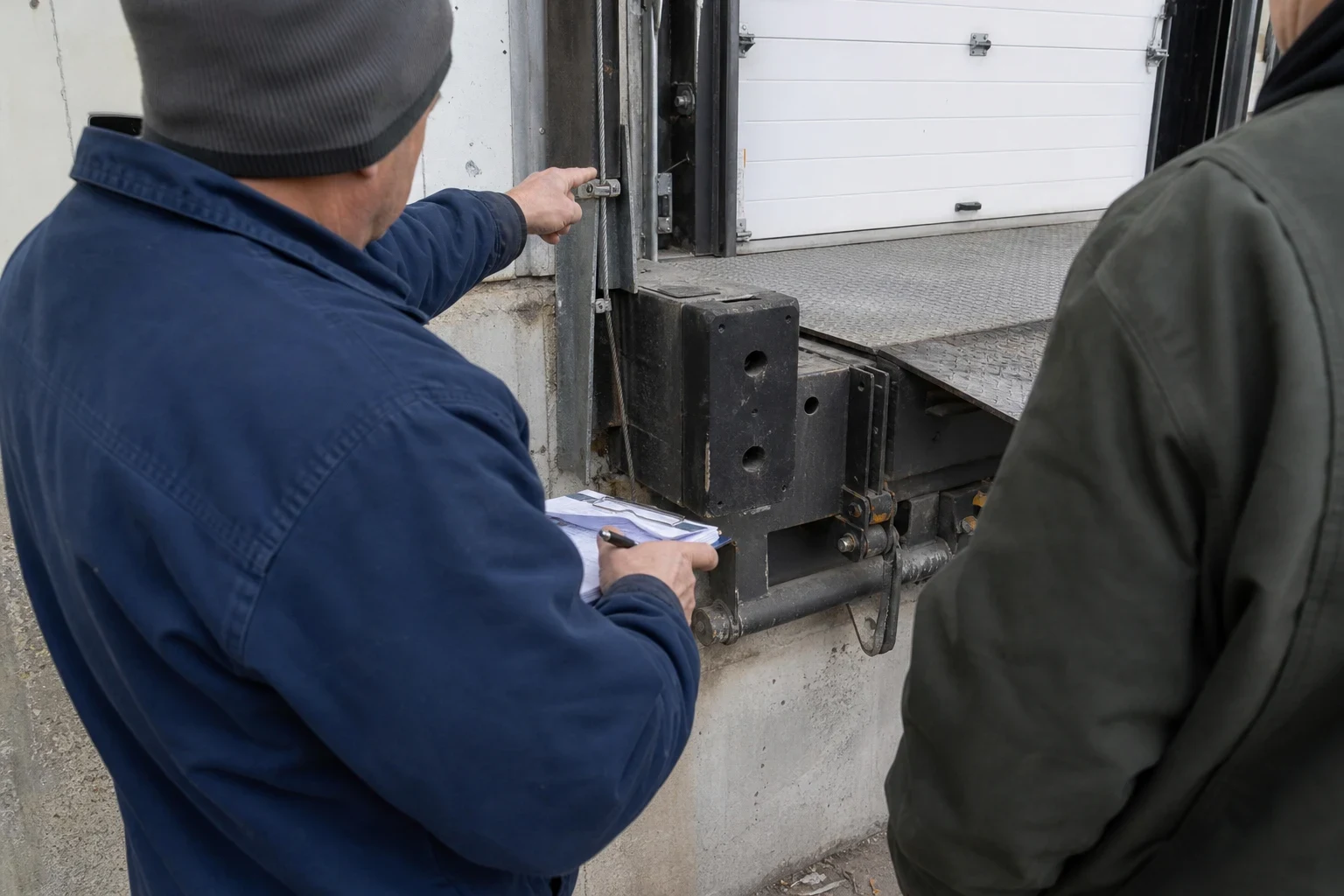
We raise the deck, set the maintenance strut and inspect the lip, hinges, springs or hydraulics, the pit and the safety features. You get a written, line-item estimate and photos of what we found.
- 3
Permits when they apply
A like-for-like repair rarely needs a permit. Pit reconstruction or new electrical service for a hydraulic unit can fall under Pennsylvania's Uniform Construction Code, so we check with the local code office and pull the permit when one is required.
- 4
Repair or installation
We lock out the dock position, barricade the work area and keep neighboring doors running where we can. Most repairs finish in one visit; replacements are scheduled around your receiving windows to limit downtime.
- 5
Testing and handover
We cycle the leveler through its full range, test free-fall protection and confirm the lip seats on a trailer. Then we walk your dock lead through what was done and clean up the pit.
What Affects the Cost of Dock Leveler Work
We price each job after seeing the leveler, because two units with the same symptom can need very different repairs. Your estimate lists parts and labor separately so you can see exactly what you are paying for. These are the factors that move the number most.
- Leveler type and capacity
- Hydraulic and air-powered units have more components than mechanical levelers. Higher-capacity decks use heavier plate and larger parts.
- Condition of the pit
- A sound pit keeps a replacement simple. Broken curb angles or crumbling concrete add steel work and possibly a permit.
- Parts availability
- Current models have parts on the shelf. Older or discontinued levelers may need fabricated lips or hinges, which takes longer.
- Scheduling and access
- Work done around tight receiving windows or across multiple doors in one visit changes how we staff and sequence the job.
Dock Leveler Questions We Get
Something not covered here? (570) 775-5759
Should I fix my dock leveler or buy a new one?
If the frame and deck plate are sound, replacing the lip, hinge pins, springs or cylinder is usually money well spent. A deck cracked clean through, a rear frame lost to rust or parts that are no longer made point toward a new unit. In both cases we send photos and walk you through our reasoning.
What standard does a dock leveler have to meet?
ANSI MH30.1 is the industry's safety and performance standard for dock levelers, and OSHA expects dock plates and bridging equipment to be secured and rated for the loads that cross them. On every inspection we check the rated capacity, the maintenance strut, the toe guards and free-fall protection.
Will I need a permit to replace my dock leveler?
Setting a new leveler into the pit you already have usually needs no permit. Reworking the pit, changing the concrete or adding wiring for a hydraulic power unit can require a building or electrical permit. We find out before work starts and handle the filing if one is needed.
Can you replace a mechanical leveler with a hydraulic model?
Often, yes, provided the pit suits the new unit and power is near the door. A hydraulic leveler is easier on operators and puts less wear on the hold-down. We measure the pit and check the electrical service before we recommend anything.
What keeps a leveler from failing again?
Regular hinge greasing, checks on the springs and hydraulics, and a pit kept free of debris prevent most breakdowns. Our loading dock preventative maintenance service covers levelers along with your overhead doors and vehicle restraints.
Put Your Dock Leveler Back to Work
Let us know what the leveler is doing and which doors it affects. We will book a visit, send you photos of the lip, hinges and pit, and write up parts and labor for your approval before anything starts.