ServicesEquipment Installation
Loading Dock Equipment Installation in Mahanoy City
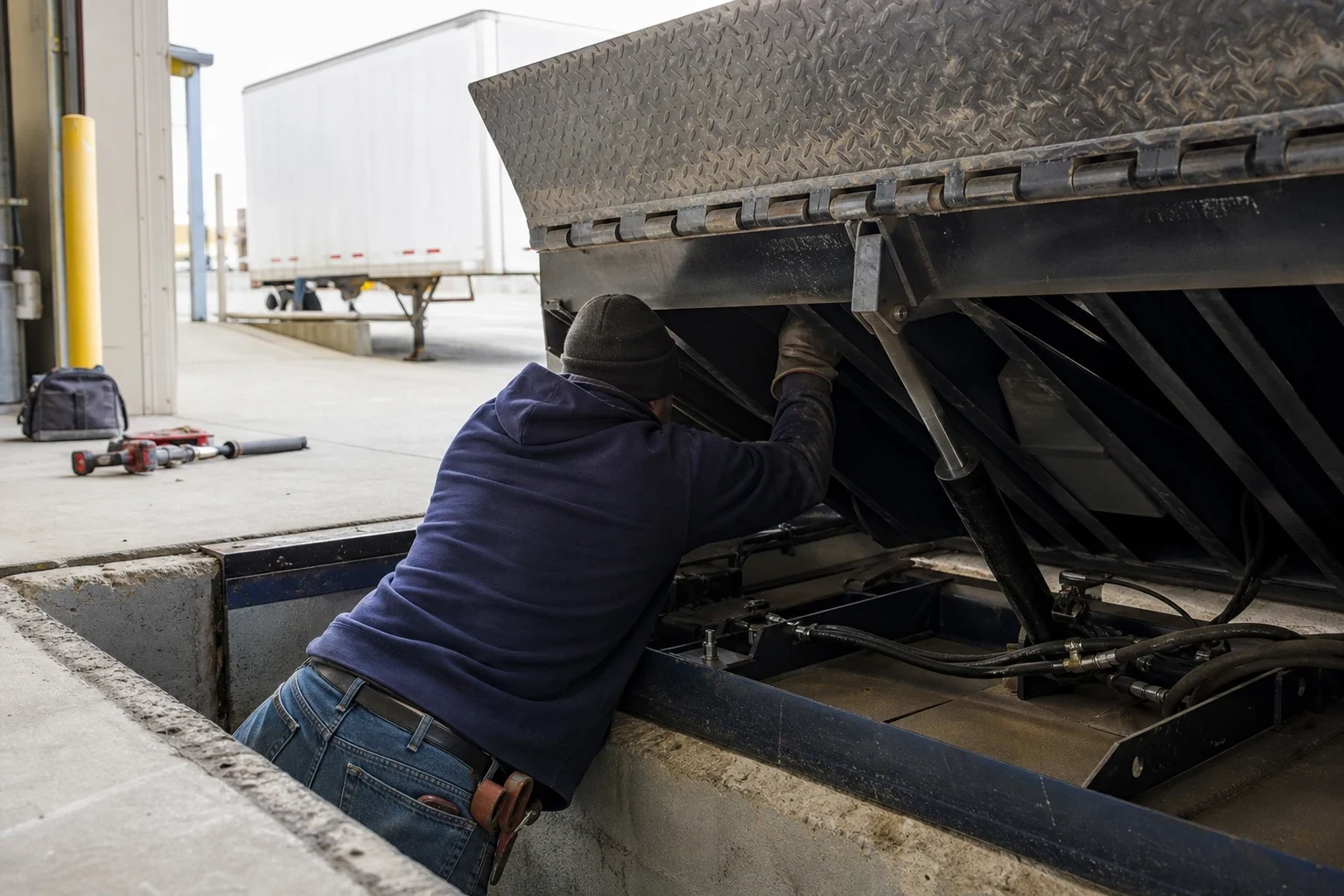
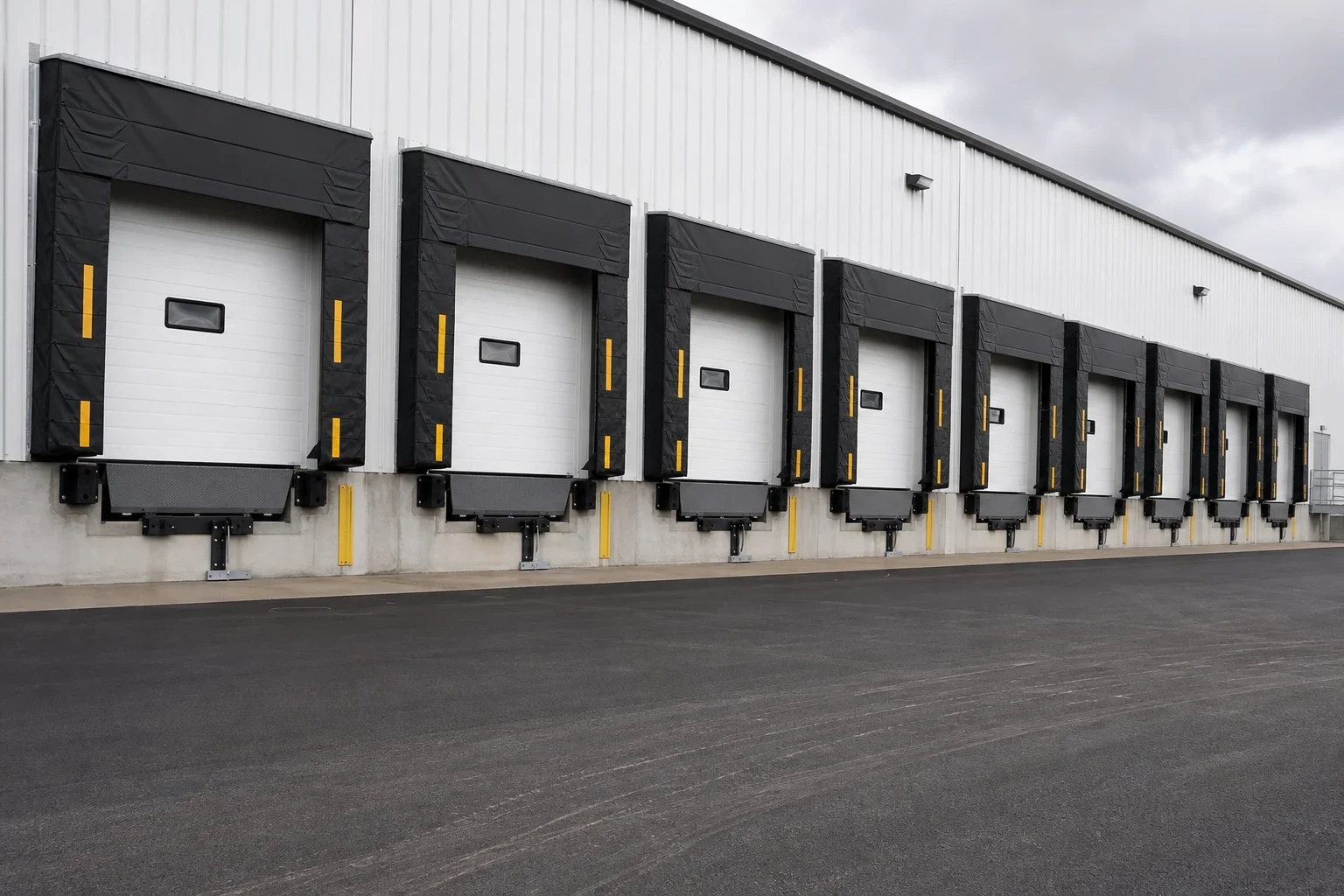
We install dock levelers, vehicle restraints, dock seals and overhead doors at warehouses, plants and receiving docks. Pit dimensions, anchoring, wiring and interlocks are set to the manufacturer's spec. The code and inspection steps are explained before work starts, so your dock passes and stays in service.
New dock equipment, set up to work and to pass inspection
Installation is the right call when a dock is being added or rebuilt, when old equipment is past repair, or when your trucks and loads have changed. A leveler rated for 25,000 pounds that now sees 40,000-pound loaded forklifts will crack welds and bend lip hinges no matter how well it is maintained. The fix is the right equipment, sized and anchored correctly.
Most problems we find on newer docks trace back to the install, not the product. A pit poured out of square racks the leveler frame. A curb angle without enough anchors pulls loose. A restraint wired without a door interlock lets a dock door open with no trailer secured. We set each piece to the published installation instructions, then test it under load.
Pennsylvania handles building and electrical review through the Uniform Construction Code, run by your municipality or its third-party inspection agency. When your project needs a permit, we tell you which one and why, prepare what the inspector wants to see, and schedule around it.
What an installation covers
- Site survey and measurements
- We measure door openings, dock height, bumper projection and the range of trailer bed heights you receive. Those numbers decide leveler length and lip size. A leveler that is too short creates a steep grade that strains forklifts and spills loads.
- Pit and curb angle work
- For pit-style dock levelers we check the pit for square, depth and drainage, and repair or form the curb angles and embeds as needed. Concrete cure time gets built into the schedule, not skipped.
- Equipment setting and anchoring
- Levelers are shimmed level, welded or bolted per spec, and fitted with bumpers sized to keep trailers off the dock face. Vehicle restraints are anchored to the dock wall at the height the manufacturer calls for.
- Electrical and interlocks
- Hydraulic and air-powered levelers, powered restraints and motorized overhead doors need dedicated circuits and disconnects. Where you want it, we tie the restraint, door and leveler together so the sequence cannot be skipped.
- Seals, shelters and doors
- Dock seals and shelters are sized to your trailer mix to cut drafts and keep snow and rain off the leveler. Overhead doors, high speed doors and rolling grilles are installed as part of the same opening when the project calls for it.
- Testing and handover
- Every unit is cycled through its full range, checked for lip extension, below-dock travel and restraint engagement, and shown to your dock staff. You get the manuals and registration paperwork for the 10-year manufacturer warranty on equipment.
When New Dock Equipment Makes Sense
The same repairs keep returning
If hinge pins, hold-down cylinders or lip springs give out season after season, the frame is often worn out. New parts on a tired deck seldom last.
Loads now exceed the rating
Bigger forklifts, battery-swap pallet jacks or heavier product can put more on the deck than it was designed to carry. Cracks in the deck plate and bent beams are the early signs.
Your trailers and dock are mismatched
Reefers, low-deck trailers and box trucks can fall outside the range your leveler covers. A steep ramp slows loading and rattles product.
Nothing holds the trailer
Wheel chocks are easy to forget. A vehicle restraint that grips the trailer's rear impact guard stops trailer creep and early pull-away, which rank among the most frequent dock accidents.
A new dock or expansion is coming
Added dock positions call for pits, power and often a building department review. Choosing the equipment early keeps you from tearing out fresh concrete later.
How an installation runs
- 1
Survey and specification
We walk the dock, measure, and talk through your trucks, loads and traffic. You get a written scope that lists the equipment, the site work and any code approval the job needs.
- 2
Code review and scheduling
If concrete, structural or electrical work requires a permit, we prepare the drawings and equipment data the code official asks for. We schedule the install around your receiving windows so one door is down at a time where possible.
- 3
Installation day
We barricade the work zone, protect the dock floor and keep the adjacent doors clear for your crews. Pit prep, setting, welding and wiring happen in sequence, and concrete is left to cure before the leveler takes load.
- 4
Inspection, test and handover
We meet the inspector when one is required, cycle every unit under load, and train your operators on the correct sequence. Old equipment and debris leave with us.
What moves the cost of an installation
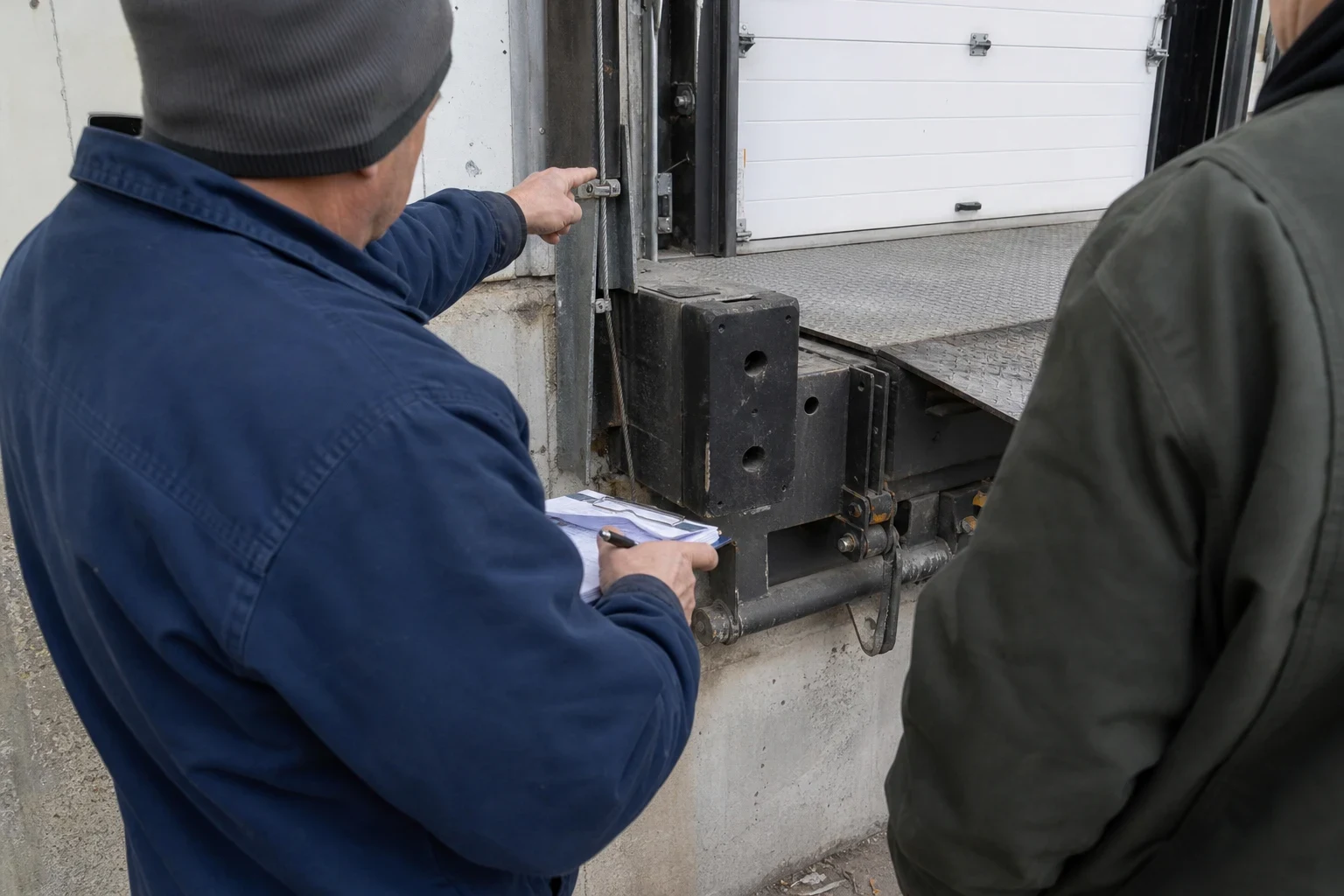
Two installs of the same leveler model can price very differently because of what sits underneath and around it. We quote by phone after a site look, line by line, so you can see where the money goes. Here is what changes the number.
- Equipment type and capacity
- Mechanical, hydraulic and air-powered levelers differ in price, as do restraint styles and door types. Higher capacity ratings and longer decks add steel.
- Condition of the pit and dock face
- A sound, square pit takes a straight swap. Broken curb angles, spalled concrete or a pit that needs to be cut or poured adds labor and cure time.
- Electrical work
- Powered equipment needs circuits, disconnects and sometimes a panel upgrade. Interlocking doors, restraints and levelers adds controls and wiring.
- Permits and inspections
- Fees and inspection visits vary by municipality and by scope. Simple like-for-like swaps often need none; new pits and new circuits usually do.
- Scheduling around your operation
- Night, weekend or phased work that keeps receiving open costs more than a straight install during a planned shutdown.
Installation questions we hear
Something not covered here? (570) 775-5759
Do I need a permit to install a new dock leveler?
It depends on the work. Swapping a leveler into an existing pit with existing power often needs nothing filed. Cutting or pouring a new pit, altering the building, or running new circuits usually triggers a building or electrical permit under the Pennsylvania Uniform Construction Code, and we tell you which before the job is scheduled.
What safety standards does the equipment have to meet?
Dock levelers are built and rated to ANSI MH30.1, and OSHA requires that dock boards and plates be strong enough for the load and secured against shifting, with trucks prevented from moving during loading. We install to the manufacturer's instructions, which are written around those requirements, and set interlocks so the safe sequence is the easy one.
How long will my dock door be out of service?
A straight leveler or restraint swap is usually completed in a day. Pit repair or new concrete adds cure time before the leveler can carry forklift traffic. We give you the expected downtime per door in the written scope.
Is the new equipment under warranty?
Yes, the equipment we install carries a 10-year manufacturer warranty on equipment. We register it and hand you the paperwork, and correct installation keeps that coverage valid.
Can you install equipment we bought elsewhere?
Often, yes. We check the model against your dock dimensions and loads first, because equipment that does not fit the pit or trailer range will not work well no matter how it is set. If you are still choosing, our Loading Dock Equipment Sales page explains how we help size it.
Do you work outside Mahanoy City?
Yes. We install at facilities in Shenandoah, Frackville, Pottsville, Tamaqua, Hazleton and the surrounding area.
Get your dock project specified right the first time
Tell us what you are receiving, what trucks back in and what is on the dock now. We will explain the equipment, the site work and any code approval involved, then give you your quote by phone after a site look.