ServicesVehicle Restraints
Vehicle Restraints in Mahanoy City
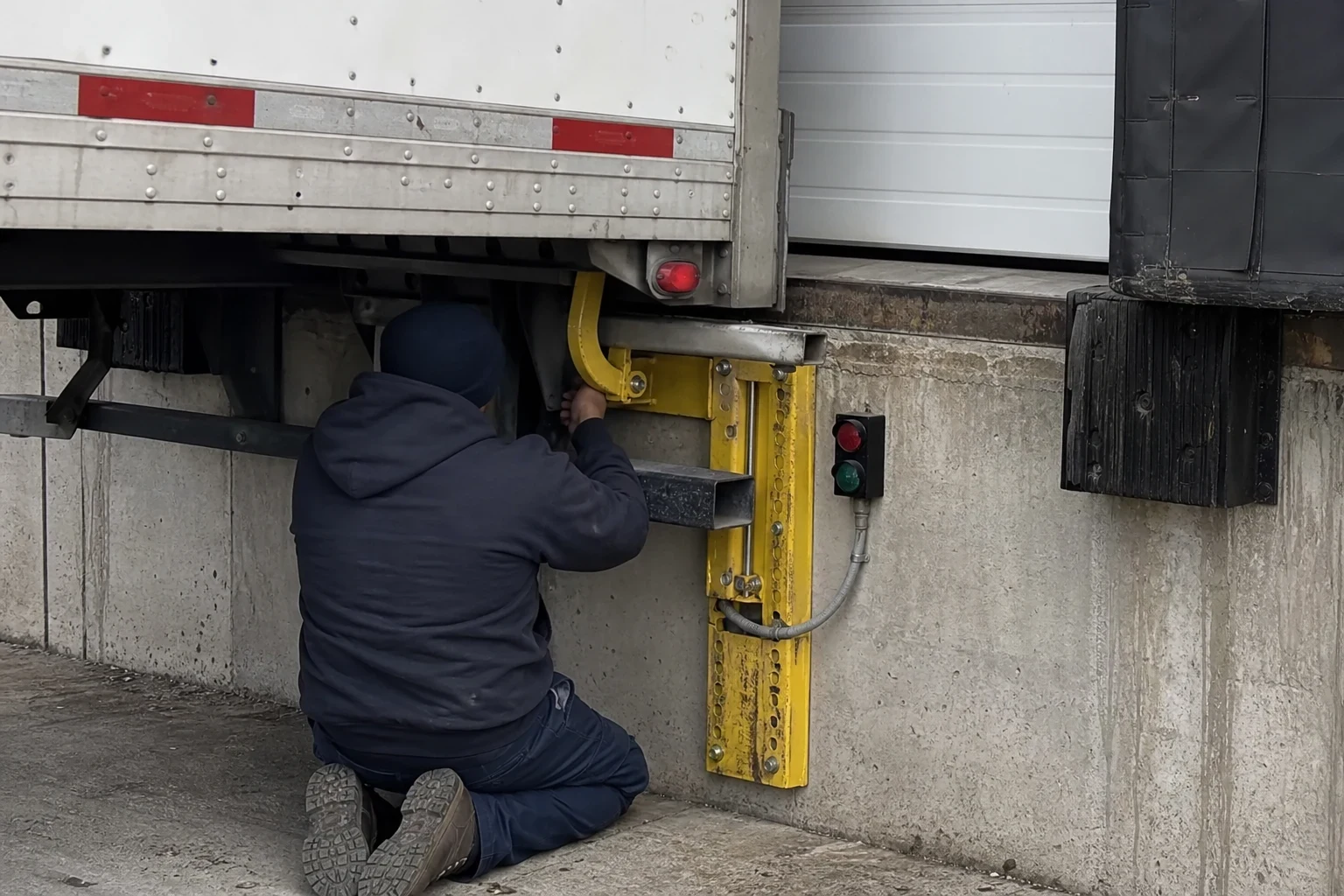
We repair, replace and install vehicle restraints that hold a trailer at the dock face until the forklift is out. Every unit is set up to the ANSI MH30.3 performance standard, wired to your communication lights and, where the electrical work calls for it, permitted and inspected.
What a Vehicle Restraint Does and When You Need One
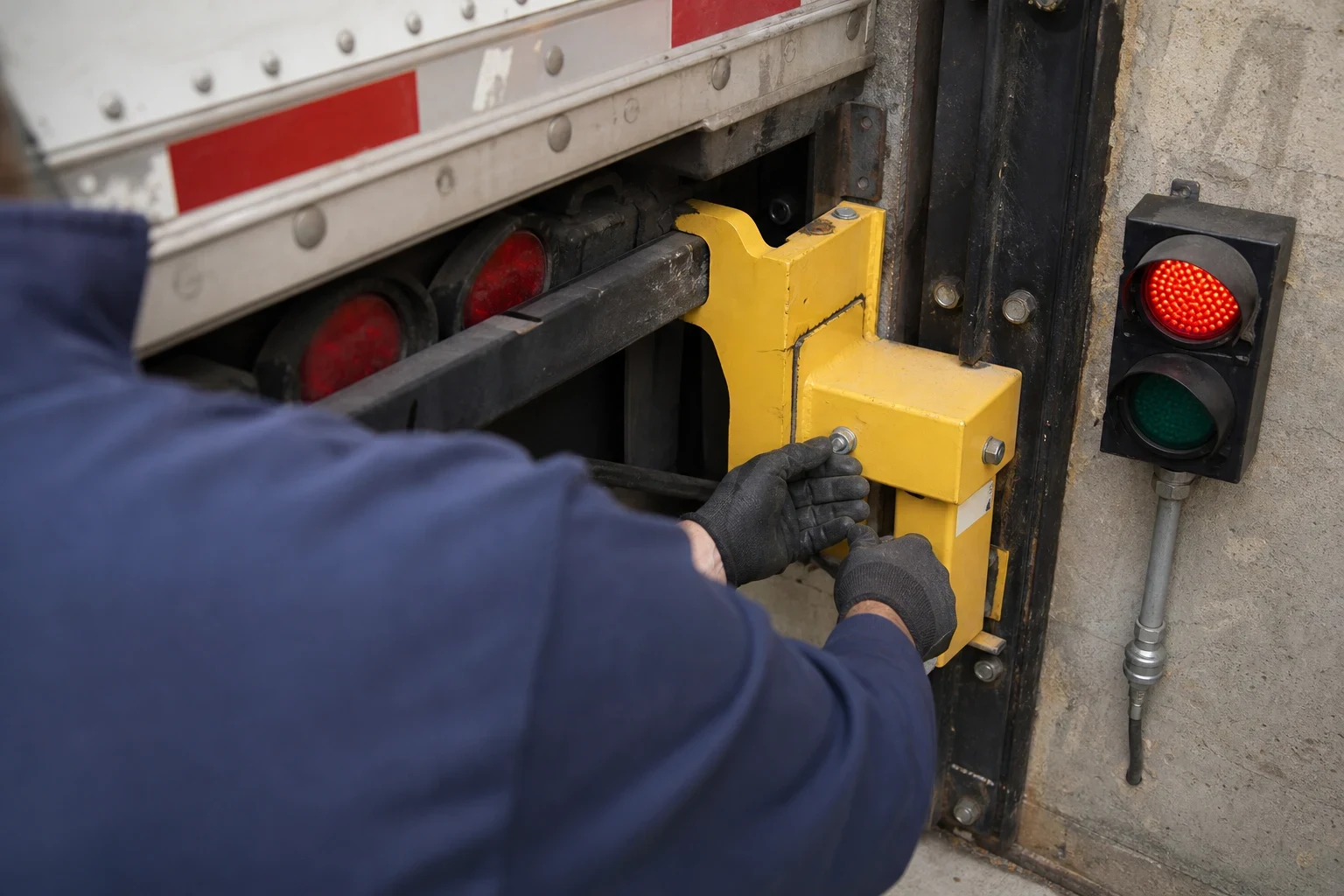
A vehicle restraint grips the trailer so it cannot pull away or creep forward while a forklift is driving in and out. Most units hook the trailer's rear impact guard, the steel bar under the back bumper. Wheel-based units lock against a tire instead. Both do the job wheel chocks are supposed to do, without relying on a driver to set and pull them.
OSHA 1910.178(k)(1) requires that trailer wheels be secured against movement when powered industrial trucks are working inside. Chocks meet that rule on paper, but they slide on ice, get left in the cab, or never get set. A restraint tied to red and green lights inside and out takes that judgment call away from the dock crew and the driver.
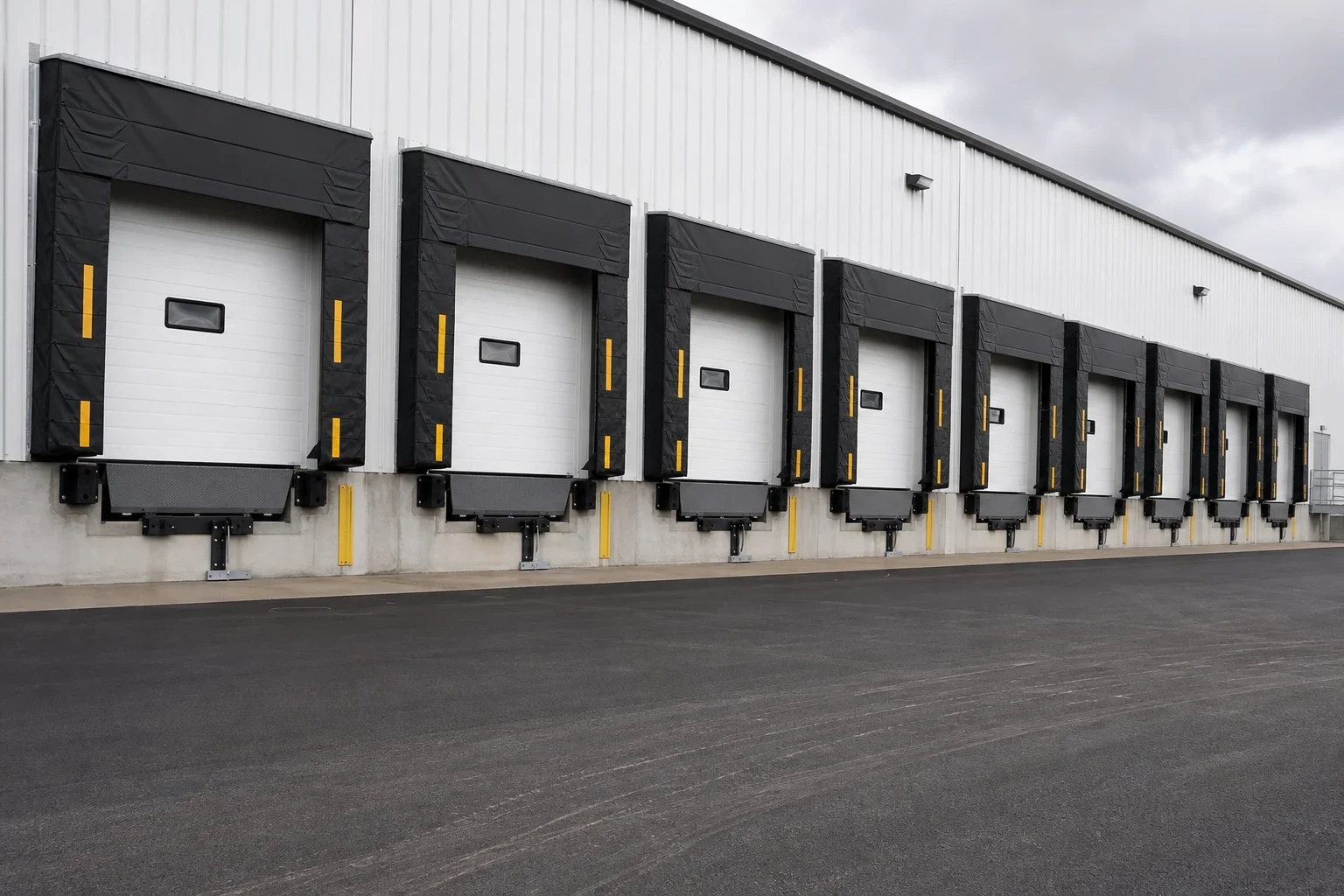
We work on facilities across Mahanoy City and nearby towns like Shenandoah, Frackville, Pottsville and Hazleton, on single receiving doors and on multi-door distribution docks.
What Our Vehicle Restraint Work Includes
- Hook restraint repair
- We replace worn hook pins, carriage rollers, springs and drive motors on rotating-hook units. We also check that the hook still rides up far enough to catch low or high impact guards.
- Wheel-based restraints
- For trailers with lift gates, damaged bumpers or nonstandard rear impact guards, a wheel-based restraint locks the tire instead. We set the guide rails and the barrier arm to the trailer widths you actually see at your doors.
- Light and signal systems
- Interior and exterior red and green lights tell the driver and forklift operator who has the dock. We wire them so green only shows once the restraint reports it is engaged.
- Interlocks with levelers and doors
- An interlock can keep the dock leveler from operating, or the overhead door from opening, until the trailer is secured. We program the sequence to fit how your crew runs the dock.
- Electrical work and code
- New restraints need power and control wiring at the dock. Where the municipality requires an electrical permit under the Pennsylvania Uniform Construction Code, we pull it and schedule the inspection.
- Equipment warranty
- New restraints we install carry a 10-year manufacturer warranty on equipment, and we register the unit so the paperwork is on file.
When Your Vehicle Restraint Is Due for a Look
Some trailers slip past the hook
A hook that lifts but doesn't grab certain trailers often has a carriage dragging in its track, or it sits too low for the trailers you receive now.
The lights say the wrong thing
Green outside with the hook still locked, or red that won't go off, is usually a bad limit switch or broken wiring. Once the signals are wrong a few times, drivers stop paying attention to them.
The dock is relying on chocks again
With the restraint out of service and chocks filling in, every load is only safe if somebody remembers to set them.
Corrosion or ice in the housing
Over a Schuylkill County winter, salt and slush pack into the bottom of the unit, rusting the rollers and freezing the carriage in place. Groaning or sticking in cold weather means it is wearing quickly.
The trailer moves while loading
A trailer that shifts when a forklift brakes inside it means the hook isn't snug against the guard, or it isn't catching the trailer at all.
What Moves the Cost of a Vehicle Restraint
Restraint pricing depends more on the dock than on the unit itself. We price every door after seeing it, and the estimate shows each part and task so nothing shows up later.
Restraint type
Manual hooks, powered rotating hooks and wheel-based restraints differ widely in parts and labor. The trailers you receive usually decide which one fits.
Condition of the dock face
Cracked or crumbling concrete at the mounting point needs repair or a steel plate before a restraint can be anchored to hold its rated force.
Power and controls
Running new conduit and control wiring, adding lights, or tying into existing leveler and door controls all add time. A permit and inspection adds its own fees.
Repair versus replacement
Replacing a switch or roller costs far less than a new unit. On older restraints where parts are hard to source, replacement can be the better long-term spend.
The Steps in a Restraint Job
- 1
Review the dock and your trailers
We check the current unit, the dock face, the slope of the approach and the kinds of trailers that back in. Worn parts and wiring get photographed so you see the same thing we do.
- 2
Line-item estimate and code review
Parts, labor and electrical work each get their own line. We say straight out whether the unit is worth repairing or done, and whether the job needs a permit.
- 3
Work one door at a time
Only the door we are on goes down, so the other positions keep running. Wall-mounted restraints bolt to the dock face, and spalled concrete often gets a steel mounting plate.
- 4
Try it on real trailers
We run the restraint against your actual trailers, check the light sequence and interlocks, and show your dock lead how it operates and how the manual override works.
- 5
Inspection and clean dock
If an inspection is required, we are there for it. Packaging and old parts leave with us, and the door is ready for the next truck.
Vehicle Restraint Questions
Do we legally have to have a vehicle restraint?
OSHA requires that trailers be secured against movement when forklifts are working in them, but it allows wheel chocks to meet that rule. A restraint is not mandatory. Many facilities add one because chocks depend on people, and a restraint with lights gives a consistent, visible signal at every load.
Will a restraint work with every trailer we get?
Hook restraints need an intact rear impact guard within their working range. Trailers with lift gates, bent guards or unusual heights may not engage. If those show up often at your dock, a wheel-based restraint is usually the better fit, and we will tell you that before you buy.
Can a restraint stop our dock leveler from working?
Yes, if you want it to. An interlock can block the dock leveler or the overhead door until the restraint is engaged. We set it up to match your operation so it adds safety without slowing the crew.
How long is a door out of service?
Most repairs are finished within the day. A new installation takes longer when new wiring or concrete repair is needed. We stage the work door by door to keep downtime down.
Should restraints be part of regular maintenance?
They should. Switches, hooks and tracks wear out quietly, especially through salty winters. We can include restraints in loading dock preventative maintenance visits alongside your dock levelers and doors.
Get Your Trailers Held Securely
Tell us what you have at the dock and what is going wrong. We will explain the options, the code and inspection picture, and what a written estimate will cover.