ServicesPreventative Maintenance
Loading Dock Preventative Maintenance in Mahanoy City
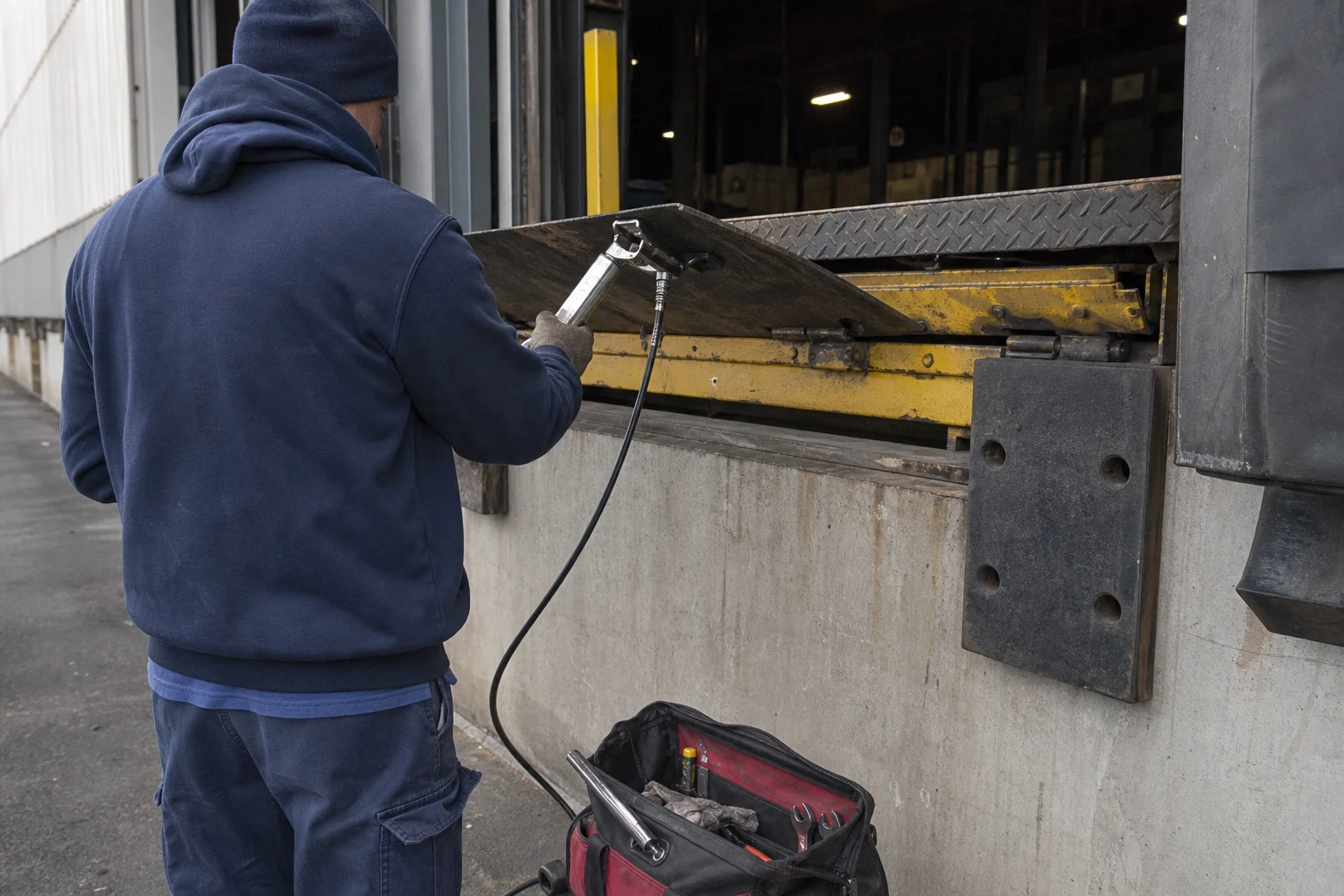
We inspect, lubricate and adjust your dock levelers, overhead doors and vehicle restraints on a set schedule. You get a written report tied to the standards your equipment is built to, and you catch worn parts before they stop a trailer at the door.
The Breakdowns Scheduled Service Heads Off
Dock trouble rarely starts big. A cylinder seal on a hydraulic leveler weeps a bit of fluid, a lip hinge pin wears down, a door spring gives up tension with each cycle. Nobody notices until the deck sinks under a loaded forklift or a door refuses to close at shift change. A preventative maintenance visit, on a set schedule, finds those changes while fixing them is a simple part swap, not a repair that takes a door out of service for the day.
Our checks follow the standards written for dock equipment. ANSI MH30.1 covers how dock levelers are built, including the lip, toe guards and the stop that keeps a deck from free-falling when a trailer leaves. OSHA calls for trailers to be secured against movement during forklift loading, so we handle vehicle restraints and wheel chocks as safety equipment rather than extras. A routine visit seldom needs a permit. If something we find leads to work that does, like structural pit repair or a change to a fire-rated door, we tell you directly and explain that step before scheduling it.
Checks on every position we service
Leveler hydraulics and mechanics
On hydraulic units we look at the oil for level and contamination, trace hoses and cylinder seals for weeping, and confirm the velocity fuse will stop a falling deck. Mechanical levelers get their springs, hold-down and ratchet checked instead. Lip extension is measured, and hinge pins and rear hinge welds are examined for cracks.
Overhead door service
Springs, cables and drums are checked for wear and tension, and track alignment is confirmed along the full run. Rollers and hinges get lubricated so they turn instead of dragging. We also test the bottom seal plus any safety edge or photo eyes.
Vehicle restraint load check
The hook is engaged against a trailer bumper or test bar and put under load to confirm it holds. Then we watch the inside and outside light signals change state in step with the hook.
Seals, shelters and bumpers
A torn seal or shelter lets weather in and heat out around the trailer. Worn rubber bumpers let trailers hit the dock wall and the leveler lip, so we measure how far each one still projects and note any that need replacing.
Written findings
You get a report organized by door position: what we found, what we adjusted and which items need a part. Photos of worn or damaged components go with it, so your team sees the same thing we did.
Signs your dock is overdue for service
The leveler drifts or bounces
A deck that sinks slowly under load or lifts unevenly usually points to low fluid, a leaking seal or a failing pump. It gets worse, not better.
The lip won't fully extend
If the lip stops short of the trailer bed, forklift wheels hit a gap. That is a trip and impact hazard and it wears the lip hinge fast.
Doors that grind or stall
Noise from rollers or a door that hesitates on the way up often means dry bearings, a bent track or a spring near the end of its cycle life.
Restraint lights don't match
When the outside light says go while the hook is still engaged, or the reverse, drivers and forklift operators stop trusting the system.
Damage after winter
Road salt and freeze-thaw cycles corrode pit hardware and crack concrete at the dock face, so a spring check after the thaw catches problems before they spread.
How a PM visit runs at your facility
- 1
Plan around your schedule
We start with a phone call to learn how many doors you have, what equipment is at each and when your receiving windows are busiest. We book the visit so we can work door by door without blocking inbound trucks.
- 2
Lock out each position
Before we touch a leveler or door, we lock out power and put the leveler on its maintenance strut. Nobody works under a deck held up only by hydraulics.
- 3
Inspect, lubricate, adjust
We work through a checklist for each position, tightening, adjusting and lubricating as we go. Small items like a loose limit switch or a dry roller get handled on the spot.
- 4
Review the report with you
Before we leave we walk your manager through the findings. Repairs that need parts are listed separately, so you decide what gets done and when.
What Drives the Price of Dock Maintenance
The cost of a maintenance program comes down to the equipment at your docks and how much it runs. Once we know your door count and what is installed, we quote by phone, and any repairs we find on a visit get their own quote before work starts.
- Number of positions
- Every door, leveler and restraint gets its own checklist. Servicing a two-door receiving area is a far different visit from servicing a twenty-door distribution center.
- Equipment type and age
- Mechanical, hydraulic and air-powered levelers each call for different checks. Older units tend to take more time, since their parts are worn and their adjustments wander.
- Visit frequency
- Docks with heavy cycling across several shifts generally need service every quarter. Docks with lighter use may need only two visits a year.
- Parts and repairs found
- Seals, springs, fluid and bumpers are charged only when needed. You see the list before anything gets replaced.
Preventative maintenance questions
Something not covered here? (570) 775-5759
How often should our dock equipment be serviced?
Most manufacturers recommend at least twice a year for levelers and doors. Docks running several shifts a day often need quarterly visits because springs and seals wear by cycle count, not by calendar. We look at your traffic and recommend a schedule that matches it.
Does maintenance need a permit or inspection?
Routine inspection, lubrication and adjustment generally do not. Work like rebuilding a leveler pit, adding a new door opening or altering a fire-rated door can involve the local building office, and we explain that before it is scheduled. We will not start permit-dependent work without telling you.
Will a maintenance visit shut down our dock?
We service one position at a time and lock out only the door we are working on. Most facilities keep receiving trucks at the other doors during the visit.
Can the report help with safety audits?
Yes. Each report lists every position, what was checked, what was adjusted and what still needs attention, with photos. Many facilities keep these as part of their equipment records for insurance and safety reviews.
What if a part needs replacing instead of repair?
We tell you which items are worth repairing and which are past it. If you replace a leveler, door or restraint, new equipment comes with a 10-year manufacturer warranty, and we can walk you through options from our loading dock equipment sales and installation work.
Put Your Dock Equipment on a Regular Schedule
Let us know how many doors you have and what equipment sits at each one. We will book a visit around your receiving hours and give you a written record for every position.